
Upgrading from STOCK: Tips!
Before you start ordering aftermarket parts, plan ahead! What’s your build goal? What voids warranty? (if that is one of your concerns), What parts require other component upgrades? What parts require retuning?
What doesn’t void warranty?: Exhaust, Midpipes, and 2.75″ Intakes.
What requires tuning?: Aftermarket Downpipes, Injectors, and 3″ Intakes. This will also void your warranty (well it depends what breaks down, anyways). You cannot replace your downpipes, or upgrade to 3″ intakes without getting bigger injectors and a tune. Your car will run so bad, stall, and will definitely go on limp “safety” mode.
Must have component parts?: Anything beyond Exhaust, Midpipe, and a small 2.75″ intake will change the cars’ ECU/calculation behaviors, and add more boost. This means that you MUST get a tune, and upgrade your factory injectors. The 570cc injectors usually max out at around 530whp (14 – 15psi).
Your build goal?: Do it right by figuring out your build goals (whp level? trap times? track only? and so on…). In my opinion, you’ve got 3 options, or stages, when it comes to upgrading/rebuilding your GT-R.
– 1st option: Full bolt-ons, adding all the plug & play parts. (stock internals)
– 2nd option: and my least favorite, is (FBO + upgraded turbos & clutch) or (FBO + upgraded motor & clutch). Many owners start with upgrading their Turbos first, and then rebuilding the Short Block at a later stage to avoid paying a lot for doing both at once. I call this the “Ticking Bomb Setup“. Upgraded Turbos mean more PSI, whp & wtq, however going beyond 600-650wtq on stock internals will damage rods/pistons and so you’ll have to limit down WTQ. Upgrading the Short Block allows up to 900+WTQ, but factory turbos only handle 20psi. So again, limiting down. Basically you’re paying for upgraded parts, yet limiting down to a little more than FBO levels.
^For more details on this option (Read This)
– 3rd option: Built Motor, Turbos & Transmission Upgrades. This falls under many levels & parts needed, depending on your power goal. But in general, this is where you will have to upgrade your engine internals, clutches, gears etc… to handle your power goals.
“FBO” BUILD GUIDE
Full Bolt-ons “FBO” are basically all the plug & play upgrade parts, without having the need to rebuild any internals. Bolt-on parts such as: Tunes, Exhaust, Midpipe, Downpipes, Injectors, Intakes, Fuels pumps, Intercooler and such. An FBO GT-R is capable of hitting 580-650whp with 1/4 trap times between 10.3-10.8 @ ~135 mph (217 kmh). Power figures & trap times depend on Dyno type, fuel used, tires and other factors.
*The FBO term is labeled differently by each car make or community. Parts above are the most common.
Video explaining FBO GT-Rs & my FBO Build–> “What an FBO Nissan GTR actually makes! (Stock to FBO“
Below are my FBO part upgrades & feedback.


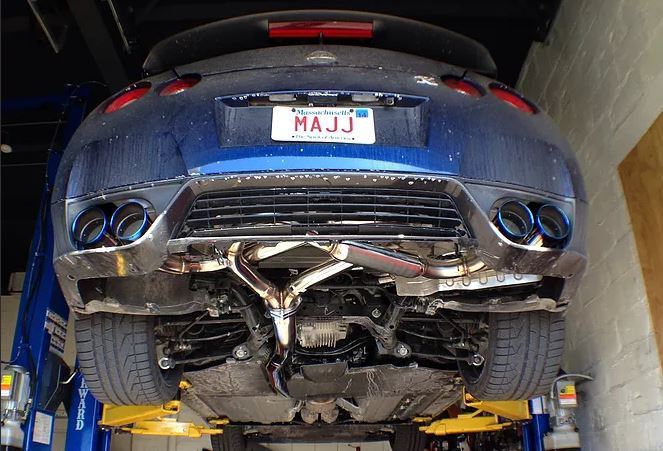
The first thing you will probably notice…is exhaust sound. With the stock exhaust setup, the GT-R is very quiet. I started with replacing the catback exhaust with the HKS Legamax Titanium Tips. The exhaust alone did not make it any different from stock sound. Next, I got the HKS Resonated Midpipe.
The midpipe & exhaust combo did make a slight difference, but not what you’ll probably looking for. The car was louder at startup, on idle, and barely at wide-open throttle. In terms of in-cabin drone, it was mostly noticeable on highway cruising speed around 65-70mph (below 3K rpms).
Finally, I decided to jump to the next stage of going FBO. I got the AMS Alpha 90mm Downpipes (Catless). This setup was amazing! It eliminated the drone I had with the HKS midpipes, improved sound, tone, and was not too obnoxiously loud when cruising. At wide open throttle, it is LOUD! Just perfect!
*Side note: I replaced my midpipes 3 times lol. My first one was the HKS Resonated, and after installing the Alpha downpipes, I replaced the midpipes with a COBB catted midpipe, thinking that it would reduce drone & fume smells. It did.
5 years later, the Cobb midpipe snapped due to salt/rust build up, while driving in winters (DETAILS –> HERE). So I went back to my HKS Resonated midpipe. Both setups we’re amazing, no drone, and no fume smells.
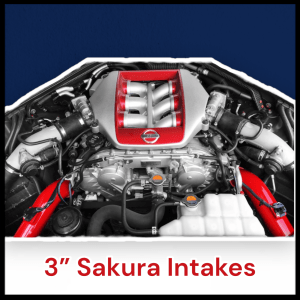


It’s either a 2.75″ or a 3″ intake, which needs tuning. Don’t do my mistake of thinking that “I’m going to keep it stock” and getting a 2.75″ to keep warranty. You’ll grow out of it and will probably end up getting a 3″ later on! There are many out there, search, ask in forums (GTRLIFE.COM) or your tuner.
I went with a COBB 2.75″ first, then swapped them with Sakura Big 3″ Intakes (in-house made by Kaizen Tuning – no longer in business). Now that you’ve got 3″ intakes & downpipes, you’re going to need a retune (You will also need bigger Fuel Injectors).

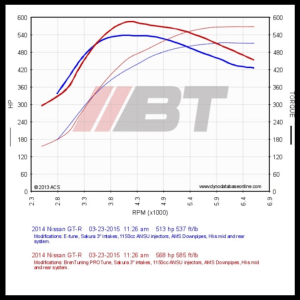

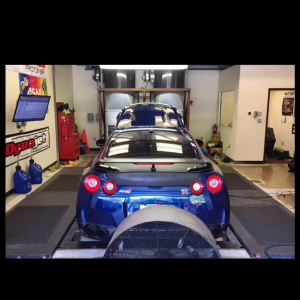
Two ECU softwares to choose from: COBB or EcuTek. Both good, each tuner has their own preference. You can also download “off the shelf” maps, but I don’t recommend that! Get a custom tune. I chose COBB, the AP V3, because I like having the AccessPort handy, viewing my own custom parameters, adjusting TCM, and most importantly reading any CEL codes instantly!
Note: There are two versions AP3-NIS-005 (does not include TCM reflash), and
AP3-NIS 006 (includes TCM Reflash). If you choose COBB, I suggest going with the 006 to be able to adjust to clutch capacities & touchpoints, especially if you plan to build your engine & trans… you will definitely need a TCM reflash done by your tuner. Next, find a good tuner, (ask on GTRLife), you can do it locally, or have an E-tune sent to you.
On April 2022, COBB released a new “Green Speed” update, which complies with California emissions regulations. It causes some annoyances if you upload any new tune, and constantly shows CEL light. Regardless to that, after my Alpha 9 build I decided to convert to EcuTek after just hearing a lot of positive feedback. The ECU Connect has great features and syncs with your phone by app (bluetooth).


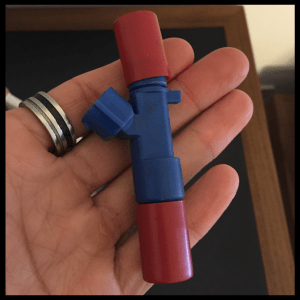

As mentioned above, if you plan to install Downpipes & big Intakes (3″), or go full FBO, the factory 570cc injectors will max out!
Choosing the injector size will depend on your power goals. For a full-bolt on GT-R, 1050cc/1100cc is enough. For my Alpha 7 setup, I went with ASNU 1100cc and capacity is around 60% at wide open throttle.
*NOTE: If you plan to upgrade from FBO to built/bigger turbos and plan to run E85, you will need at least 1700cc injectors. I’m currently at the built stage, with the same 1100cc, which allows me to run with C16 (high rating octane race fuel).
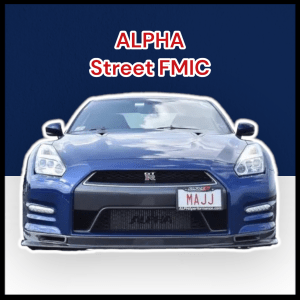
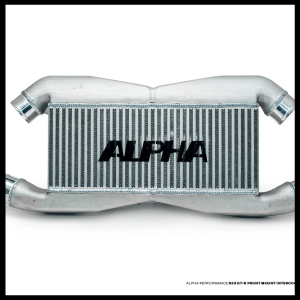


Most manufacturers have 2 types, Street (for FBO’s) and Race (made for built GTR’s over 1000whp+). I got the Alpha Street Intercooler, which is a direct bolt on, including “Alpha” etched on it. This FMIC will also fit your stock IC pipes.
Surprisingly, the intercooler alone added about 40+whp after doing a dyno re-tune on my previous Alpha 6 setup (Downpipes, Mids, Exhaust, 3″intakes, Injectors).
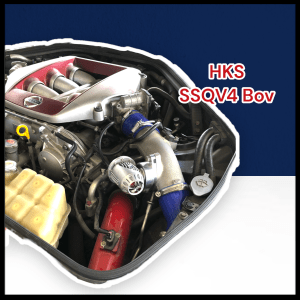
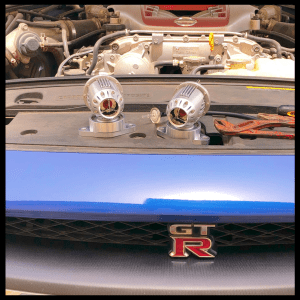

Want that “psshhhew” flutters? Those are made by BOVs. They don’t add any power, just noise. There are two ways running BOVs, recirculating air back into the intakes, or venting out to atmosphere. Venting out is what gets you those flutters.
MYTH: Most tuners say running VTA needs a Speed Density Kit, which means moving the temp sensor from the Intake to the charge pipe to properly calculate SD Based fueling for $350!
Not true, and I can confirm that. I’m running VTA with the HKS SSQV 4, without a Speed Density kit. My tuner does all his tune bases on SD. My car runs fine, no knock or limp.

Flex Fuel (E85)
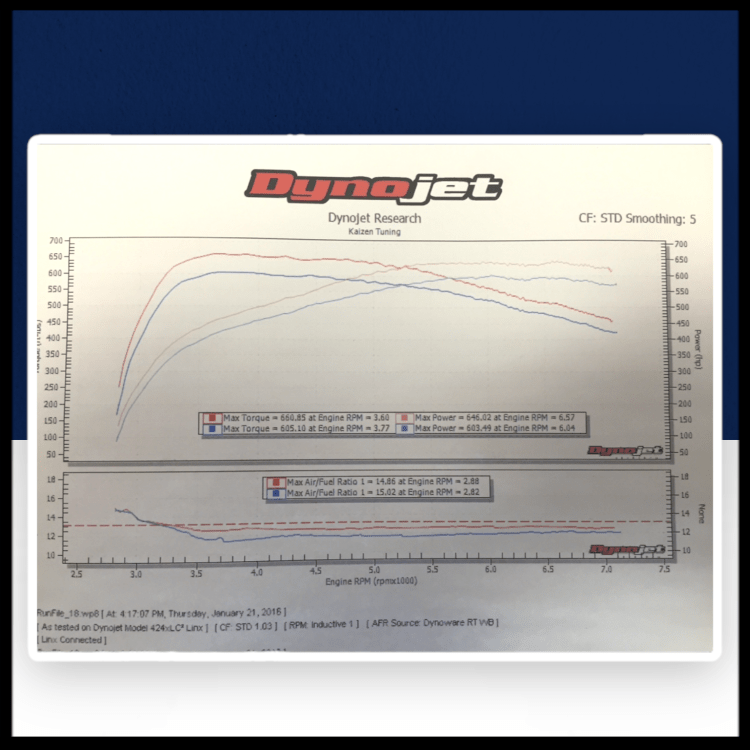
You will need a Flex Fuel Kit, Fuel Pumps, and a re-tune. For the Flex Fuel Kit, I got the Visconti V2, which allows you to swap or mix pump gas and e85 freely without any harm. For fuel pumps, I got the ASNU 330lph. With my FBO Alpha 7 setup.
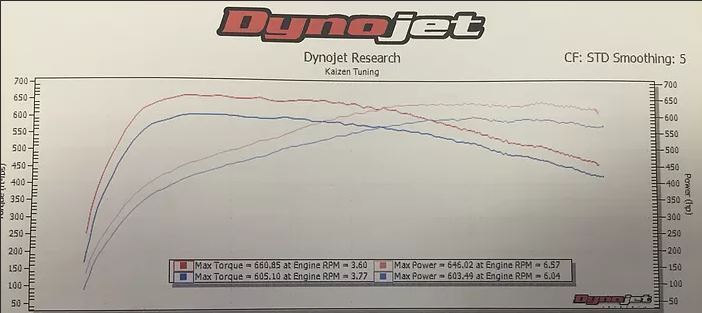
DynoJet Numbers (FULL BOLT-ONS):
e85: 646whp / 661wtq
93Aki: 603whp / 605wtq
For daily content & updates, follow my social pages.
 MAJJ GARAGE
Leave a comment