
The R35 GT-R is one of the most sensitive street performance cars when it comes to alignment.
Unlike regular sports cars, the GT-R’s AWD, weight distribution, and aggressive suspension geometry mean that alignment directly affects how the car turns, brakes, accelerates, and how long your tires survive.
If your GT-R feels unstable, wanders on the highway, or destroys tires in a few thousand kilometers, the alignment is usually the cause.
Why Alignment Matters So Much on the GT-R
The GT-R chassis (CBA / DBA / EBA) has naturally aggressive camber curves and toe change under load. Even a small misalignment will:
- Increase tire wear dramatically (especially inside shoulders)
- Cause high-speed wandering
- Make turn-in sluggish or overly sharp
- Cause tramlining on uneven roads
- Affect launch stability due to toe change
Because the GT-R is heavy and has wide tires, alignment accuracy matters more than on lighter performance cars like the 911, M3, or Supra.
My Wheel & Tire Setup
- Front: 285/35/20 Pirelli P Zero
- Rear: 295/35/20 Pirelli P Zero
- Cold PSI: 33 psi front / 34 psi rear
P Zeros grip well but wear fast when camber or toe is off. This alignment is tuned to keep street wear reasonable while maintaining sharp response.
My Current Alignment Specs
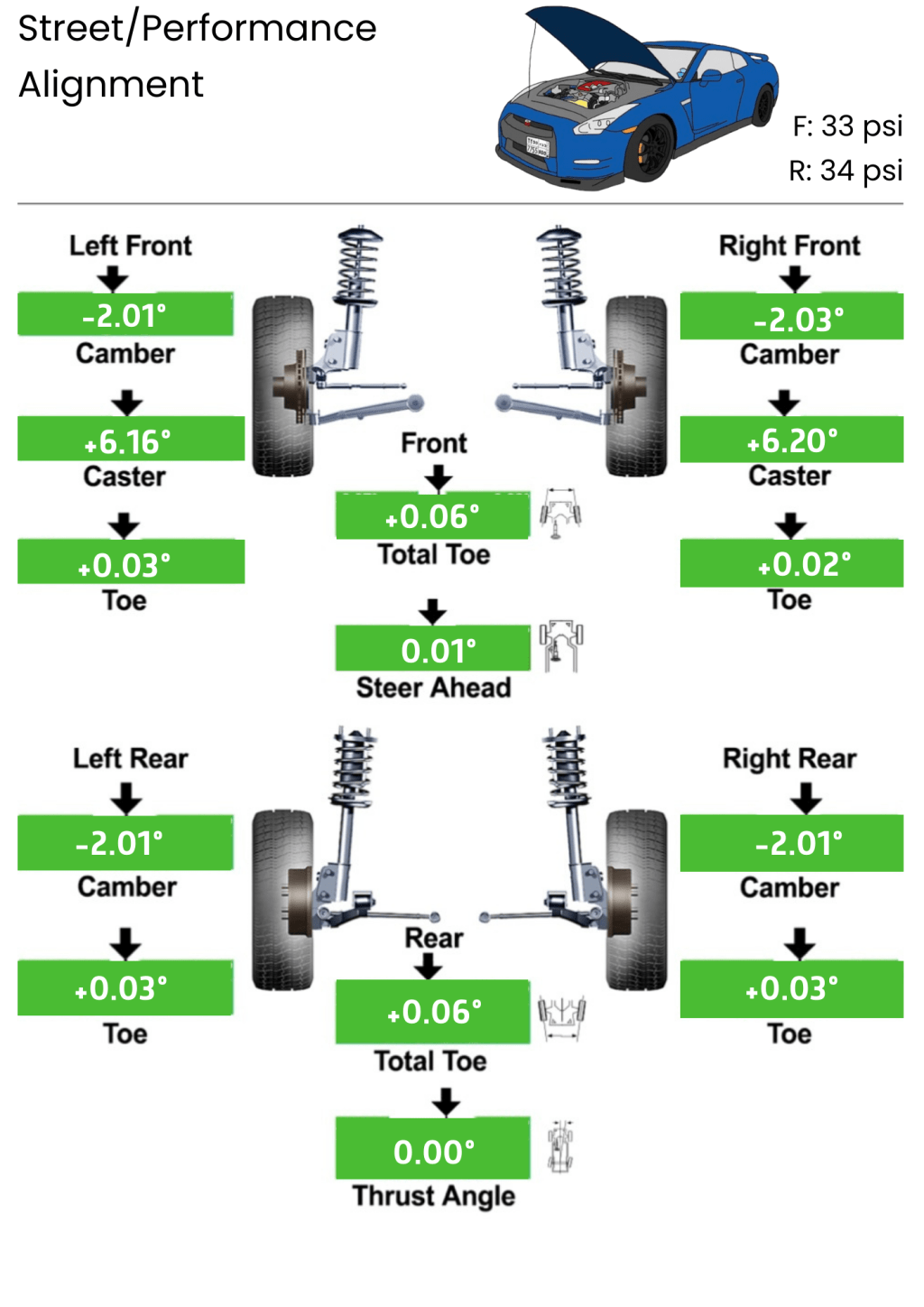
Below are the exact specs from my latest alignment session:
Front Alignment
- Camber: –2.01° (LF) / –2.03° (RF)
- Caster: ~6.16° / 6.20°
- Toe: +0.03° (LF) / +0.02° (RF)
- Total Front Toe: +0.06°
Rear Alignment
- Camber: –2.01° (LR) / –2.01° (RR)
- Toe: +0.03° (each side)
- Total Rear Toe: +0.06°
- Thrust Angle: 0.00°
This is a street-biased performance setup that keeps the car stable, predictable, and ready for spirited driving without being overly aggressive or chewing through the inside shoulders.
Why I Chose This Alignment
1. –2.0° Front & Rear Camber
- This gives a perfect balance:
✅ Better cornering grip
✅ Less inside tire wear than -2.5°+
✅ Stable at high speed
2. Positive Toe-In (Front + Rear)
A small amount of toe-in keeps the GT-R planted:
- Front toe-in improves straight-line stability
- Rear toe-in prevents the rear from stepping out at speed
Toe is the #1 killer of tire life — these values keep wear controlled.
3. 6°+ Caster
Caster affects steering feel.
Above 6° gives:
- Sharper turn-in
- Better self-centering
- More camber gain during cornering
Perfect for a street/spirited setup.
How This Setup Feels
- High-speed stability: Excellent — car tracks straight with no wandering
- Turn-in: Sharp without being twitchy
- Ride comfort: Slightly firm due to camber, but still street-friendly
- Tire wear: Very reasonable for P Zeros (as long as toe stays in spec)
If you daily a GT-R but still push it on weekends, this alignment is the sweet spot.
Recommended Street Alignment for Most GT-R Owners
If you want a balanced daily + spirited setup:
- Front Camber: –1.8° to –2.2°
- Rear Camber: –1.6° to –2.0°
- Front Toe: +0.02° to +0.05°
- Rear Toe: +0.02° to +0.05°
- Caster: 6.0°–6.5°
This keeps the car neutral, safe, and fast without burning through expensive tires.
When to Get an Alignment
- After new tires
- After suspension work
- If the car pulls left/right
- If the steering feels loose
- If inside tire shoulders wear early
- Every 6–12 months for spirited drivers
The GT-R changes alignment naturally over time due to its weight and bushing deflection, so yearly alignment checks are worth it.
Final Thoughts
A proper alignment transforms the GT-R more than most people expect.
With the right camber, caster, and toe, the car feels alive, sharper, and more predictable,and your tires finally last more than a few thousand kilometers.
This setup has been the best balance for my P Zero 285/295 combo with 33/34 psi cold, and it’s a great starting point for anyone looking to dial in their GT-R for street and spirited driving.
 MAJJ GARAGE
Leave a comment