
Intro
Blow-off valves (BOVs) are popular among Nissan GT-R enthusiasts not for their impact on power but for the distinctive “psshhhew” sound they add to the driving experience. This guide will explore how BOVs work, debunk common myths, and offer troubleshooting tips for common issues.
Understanding Blow-Off Valves
BOVs are designed to release pressure built up in the turbo system when the throttle suddenly closes. Releasing this pressure helps prevent turbo flutter, prolongs the life of the turbocharger, and maintains performance. There are two primary methods of configuring BOVs:
1. Recirculating: The air is sent back into the intake stream, which is quieter and maintains the original air metering configuration.
2. Venting to Atmosphere (VTA): Air is released into the atmosphere, producing the characteristic fluttering sound many enthusiasts love.
Common Myth Debunked
There’s a prevalent myth suggesting that running a VTA setup requires a Speed Density (SD) Kit, which typically involves relocating the temperature sensor from the intake to the charge pipe for proper fuel calculation. The kit is often cited to cost around $350.
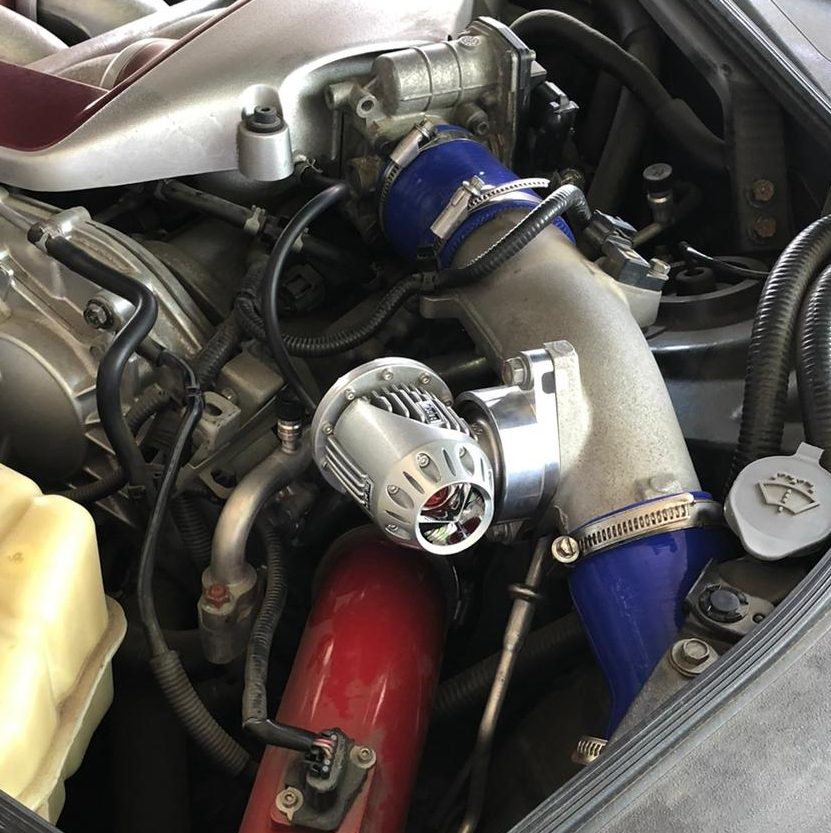
Contrary to this, I have successfully run a VTA setup using the HKS SSQV 4 without needing a Speed Density kit. My tuner manages all tune bases on SD metrics, and the car performs well without any signs of engine knock or entering limp mode.
Troubleshooting Common BOV Issues
1. BOV Not Making Noise:
Cause: This can happen if the BOV is not opening properly due to a vacuum leak or incorrect installation.
Solution: Check all hoses for tight connections and ensure the BOV is installed correctly. Also, verify the vacuum line to the BOV isn’t pinched or leaking.
2. Engine Running Rich or Limp Mode Activation:
Cause: If the car runs rich or enters limp mode after installing a VTA BOV, it might be due to the mass air flow (MAF) sensor reading excess air that’s no longer re-entered into the system.
Solution: Consult with a tuner who may adjust the MAF sensor readings or recommend switching to a recirculating BOV setup.
3. Stalling or Rough Idle:
Cause: This issue could be caused by the BOV releasing too much air, disrupting the air-fuel mixture
Solution: Check the BOV spring tension and adjust if necessary. Ensure the BOV isn’t stuck open.
Conclusion
BOVs are a great way to enhance the auditory experience of driving a turbocharged vehicle like the Nissan GT-R, but they require correct installation and tuning to function properly. While the myth of needing a Speed Density Kit for VTA setups is widespread, it is not always necessary, as demonstrated by personal experience with the HKS SSQV 4. Always ensure your setup is tuned correctly to avoid potential issues like engine knock or poor performance.
For daily content & updates, follow my social pages.
 MAJJ GARAGE
Leave a comment